

Sri Lanka’s First Passenger Drone Arrives, With Maiden Flight Set for Colombo Port City
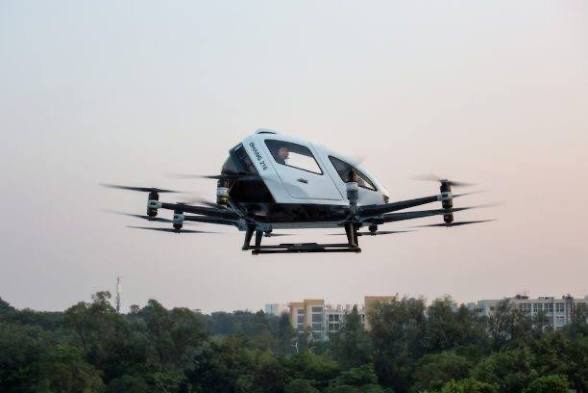
Photograph: Newswire.
Sri Lanka has taken an early step towards introducing electric passenger aircraft, with its first passenger transport drone arriving at Bandaranaike International Airport and a maiden flight expected to take place from Colombo Port City. The proposed flight, announced by the Civil Aviation Authority of Sri Lanka (CAASL), is part of a pilot initiative to assess how electric vertical take-off and landing (eVTOL) aircraft might be used in the country.
The arrival places Sri Lanka among the first countries in the region to examine this emerging form of aviation. However, the aircraft is not yet operating a passenger service: any flight or future service remains dependent on regulatory, technical, operational and safety assessments, as well as the necessary infrastructure.
A two-passenger aircraft for a planned pilot
The aircraft, imported under the EHang brand from Thailand, is designed to carry two passengers and has an approximate flight duration of 30 minutes. CAASL Director General Daminda Rambukwella told the Daily Mirror that the first flight was expected on 30 or 31 October, or during the first week of November. Colombo Port City has been identified as the initial operational zone, while the flight’s destination was to be determined after discussions with the Ministry of Defence scheduled for 23 October.
A second shipment is expected to arrive on 28 November, according to the report. The initial aircraft is intended to support a pilot programme through which aviation authorities and project partners can examine the aircraft’s suitability and operating requirements in Sri Lankan conditions.

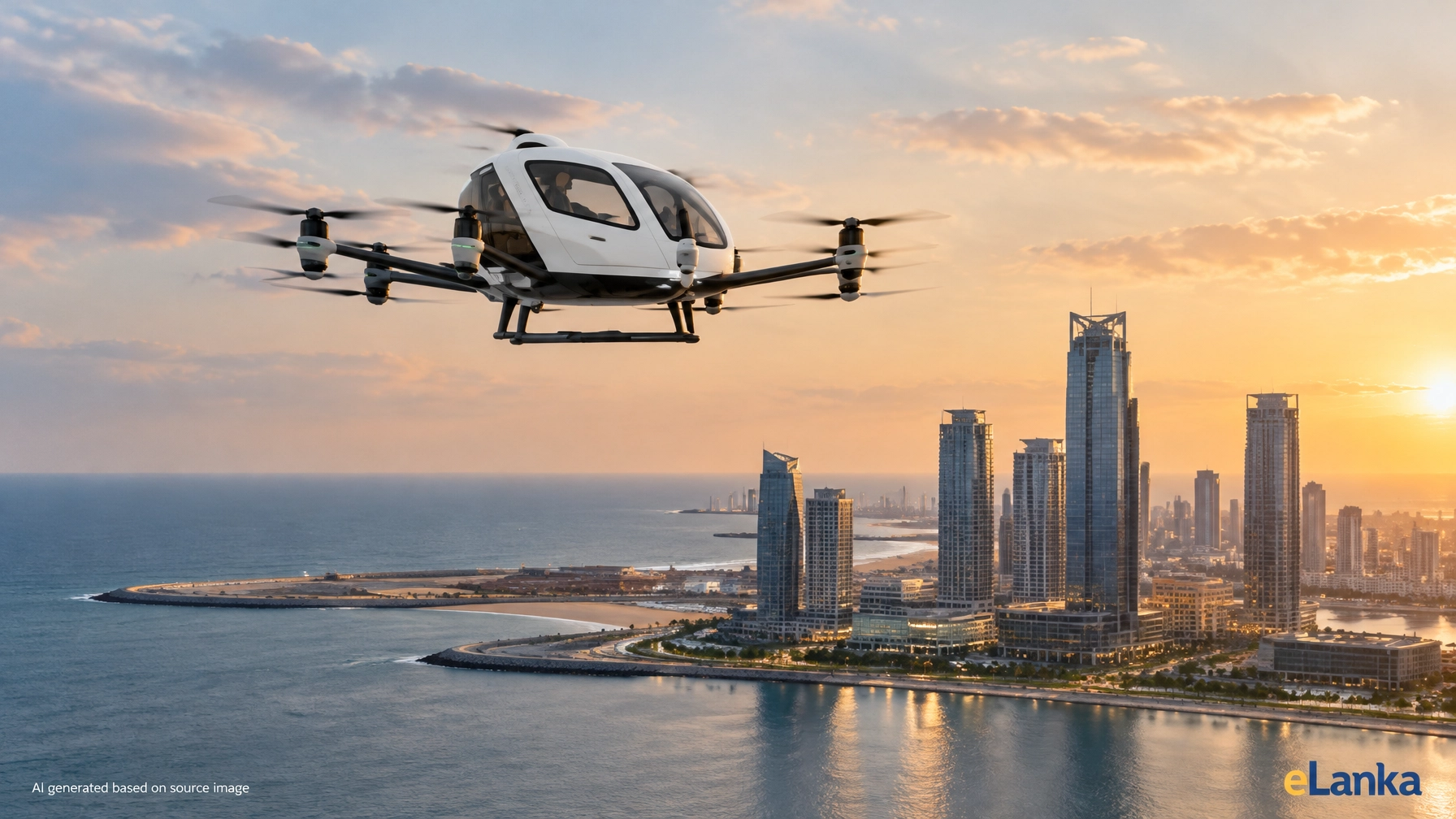
Concept illustration: AI generated based on the source image. The aircraft and service depicted are illustrative; the proposed service is not yet operating.
Sri Lanka is the first country to adopt EHang’s Global Fast Track Programme, introduced to help accelerate the assessment and deployment of pilotless eVTOL aircraft in international markets. In its programme announcement, EHang described a staged approach, moving from regulatory alignment and preparation of a designated test area to validation flights and, subject to approvals, possible commercial operations.
The programme sets out a pathway, not a guarantee of launch. The company’s announcement and CAASL’s comments both make clear that progress depends on completing the required assessments and obtaining approvals. Sri Lanka’s adoption of the initiative therefore represents an opportunity to test the technology within a structured framework, while the conditions for safe operation are established.
Port City as the initial operating area
Colombo Port City has been selected as the project’s initial operational zone. Proposed applications include passenger transport and tourism, with possible scenic flights over Sigiriya and Pidurangala, and transfers between Bandaranaike International Airport in Katunayake and hotels in Colombo.
Such routes could offer visitors a different perspective on well-known heritage and urban destinations, while airport transfers could, if approved and made operational, add another option for travel between the airport and the capital. At this stage, these are routes under consideration rather than confirmed services. Their feasibility will depend on route planning, airspace coordination, suitable landing and take-off locations, and the required safety clearances.

Concept illustration: AI generated based on the source image. The scenic flight is a proposed possibility, not an existing service.
The proposal also extends beyond urban journeys and sightseeing. Rambukwella told the Daily Mirror that possible future uses could include emergency medical services and delivery of cargo to areas that are difficult to reach. Scenic flights over the hill country and coastal locations, including areas associated with whale watching, are also among the potential applications being explored.
For an island with varied landscapes and communities spread across coastal, rural and upland areas, these possibilities have clear public-interest dimensions. If the technology proves practical and can be operated safely, it may offer additional ways to connect destinations and deliver essential supplies. That potential, however, will need to be tested carefully; no benefit should be assumed before the pilot programme and infrastructure plans are assessed.
Regulation, infrastructure and the next steps
CAASL has said that the necessary regulatory processes for the selected aircraft have been completed under the relevant United States certification standards, while local regulations governing Advanced Air Mobility (AAM) systems are being finalised. An international team of experts is expected to visit Sri Lanka to discuss implementation in light of the country’s geography and transport needs.
The aircraft are expected to operate at altitudes of approximately 400 to 500 feet and to use real-time tracking and monitoring systems. As with any new form of aviation, the safe integration of flights will require careful planning, technical oversight and coordination with the relevant authorities.
Dedicated facilities known as vertiports will also be needed to support take-offs, landings, charging and passenger handling. Their design and placement will be central to whether a planned air mobility service can operate reliably and fit appropriately into existing transport and aviation systems.

Concept illustration: AI generated based on the source image. Vertiport facilities and related services are proposed concepts.
CAASL is also looking beyond the initial two-passenger aircraft. The authority plans to introduce larger aircraft capable of carrying four to six passengers next year. These could potentially serve as shuttles operating at intervals of around 30 minutes over distances of approximately 20 kilometres. The timing, route design and operation of such services would depend on the outcome of the pilot, further approvals and the establishment of suitable facilities.
The project may also create opportunities for passenger-drone manufacturers to establish operations in Sri Lanka, depending on the business model agreed with the Government. Rambukwella told the Daily Mirror that discussions on this possibility were ongoing. Countries including China, Singapore and Thailand have begun introducing passenger-drone technology, while Sri Lanka intends to assess its suitability through a pilot programme before considering wider adoption.
A measured step towards future mobility
The arrival of the first aircraft is an important milestone in Sri Lanka’s exploration of electric air mobility, bringing together aviation technology, tourism planning and possible transport applications. For Sri Lankans at home and abroad who follow the country’s innovation and development, the initiative offers a notable example of a new technology being considered for local conditions.
Its longer-term value will be determined not simply by the aircraft’s arrival, but by the quality of the testing, the completion of local regulations, the construction of appropriate facilities and the ability to demonstrate safe, practical operations. If these requirements are met, electric air mobility could add new possibilities to Sri Lanka’s transport and tourism landscape. For now, the proposed maiden flight marks the beginning of that assessment, rather than the start of a passenger service.
Sources
- Newswire: Sri Lanka’s first passenger drone arrives ahead of maiden flight
- Daily Mirror: Passenger drones set to take off in Sri Lanka
- EHang: EHang Launches Global Fast Track Program to Accelerate International Commercialization of Pilotless eVTOL; Sri Lanka First to Adopt
This article was written based on the sources above. Kindly email us at info@eLanka.com.au if any information needs to be corrected.
At eLanka, we respect the rights of creators. If we have used an image you own and you’d like it removed, please email us at info@elanka.com.au and we’ll handle it promptly.
Thanks.
eLanka team
eLanka Disclaimer
Content published on eLanka may be created by the eLanka team, submitted by contributors or third parties, reproduced or adapted from other sources with appropriate source acknowledgement, or provided as promotional/advertising material by our clients. While eLanka takes reasonable care in preparing and publishing content, we do not warrant its completeness or accuracy. Views expressed are those of the respective authors or contributors and do not necessarily represent the views of eLanka. Third-party contributors, content providers and advertisers are responsible for the accuracy of material they supply and for ensuring they hold the necessary rights and permissions for its publication. Advertising and promotional content should not be regarded as an endorsement by eLanka of any product, service or claim.