

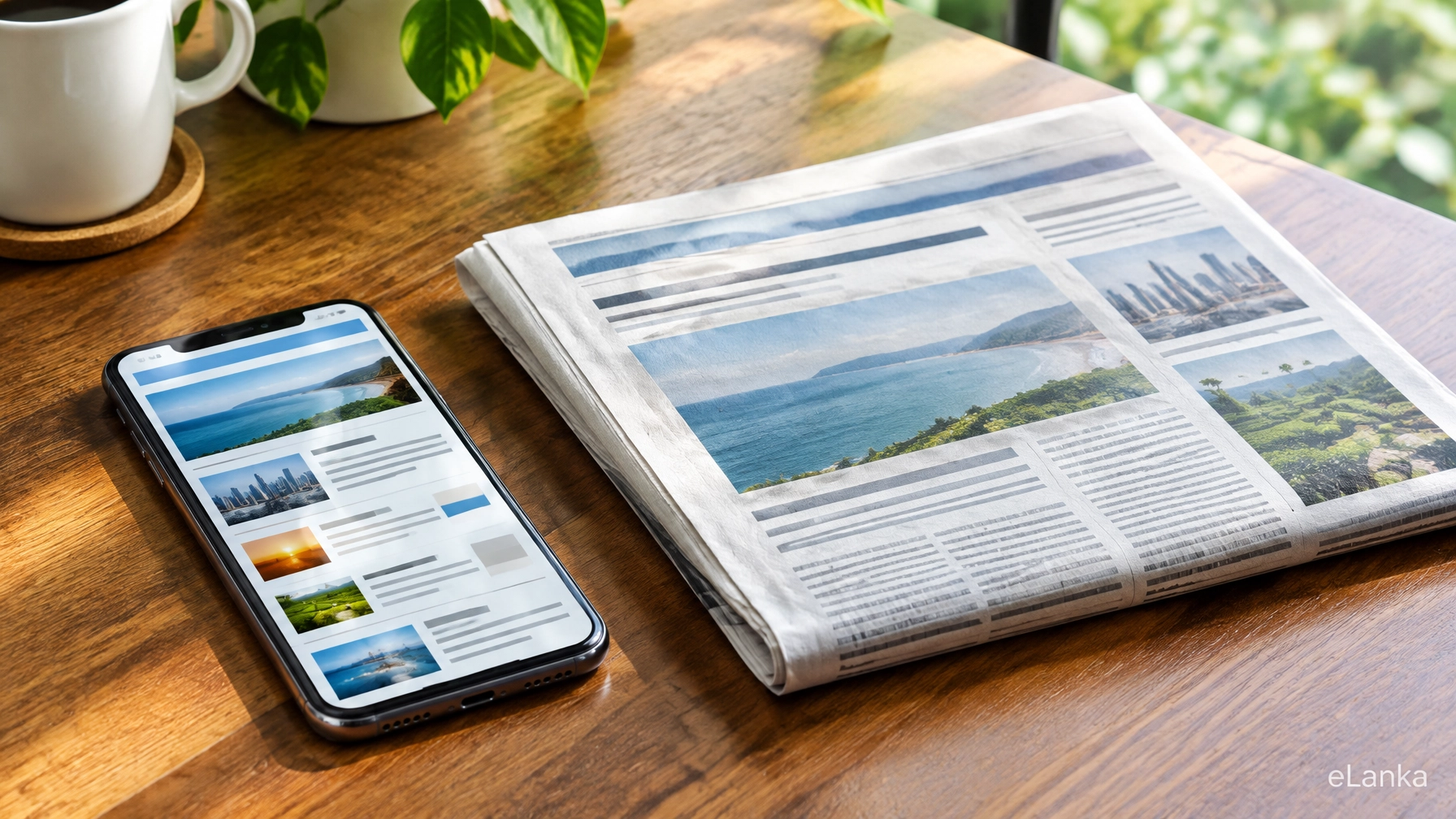
Sri Lanka Newspapers Online vs Print: Which Is Better for Readers Abroad?

For Sri Lankans living abroad, keeping up with news from home can be harder than it should be. A print newspaper may arrive days late, or not be available at all. Online, readers can encounter different access arrangements from one publication to another. And while Sri Lanka’s news is published in English, Sinhala and Tamil, an important story may be covered in greater depth in just one of those languages.
For readers in the UK, following Sri Lankan news on a phone is now a practical part of daily life. But that does not mean print has lost its value. Each format serves a different purpose, and a mix of sources can give readers a fuller view of events in Sri Lanka and the diaspora.
Sri Lankan newspapers in print: what they offer
Sri Lanka has a long newspaper tradition and a range of established titles. For many readers, especially older generations, the physical paper remains familiar and enjoyable: it offers a considered reading experience, a clear route through the day’s news and space to pause over features, editorials and obituaries.
For readers overseas, however, print has practical limitations. International delivery can take time, postage can add to the cost, and the paper may already be several days old when it arrives. Sri Lankan print titles are also not widely available in UK newsagents, so access can depend on a specialist shop, a community contact or an individual subscription arrangement.

Print still works well if the ritual of reading a paper matters more than following a story as it develops. For breaking news from abroad, its delay makes it a less practical choice.
English newspaper in Sri Lanka: online editions
Sri Lanka has several established English-language newspapers and news sites, including long-running daily titles and their online editions. Publications such as the Daily Mirror, Daily News, The Island and the Sunday Times cover national news, politics, business and sport in English.
Online access makes it easier for readers abroad to check updates from a phone, tablet or computer. Yet the experience varies between sites. Some readers may find pages slow or crowded; some analysis or other material may require payment or registration; and sports coverage does not always update at the same pace as a live event. Mainstream Sri Lankan outlets also tend to focus on news from the island, rather than Sri Lankan community life in the UK.
Access arrangements can change, so check each publication’s current subscription and registration policy before relying on a particular article or service. No single English-language site is likely to cover every subject or perspective a reader needs.

Sinhala newspapers and Tamil newspapers in Sri Lanka
English-language reporting is useful, but it is not the whole picture. Readers seeking detail on regional affairs, court matters or local community issues may find that Sinhala or Tamil coverage gives a story more context. Some reports and statements may be available in one language before they appear in another.
That can present a real barrier for second- and third-generation Sri Lankans who are not confident reading Sinhala or Tamil. A few practical habits can help:
- Follow a selection of English, Sinhala and Tamil sources, rather than relying on one outlet.
- Use your browser’s translation feature to get the broad meaning of a report.
- Treat machine translation as a guide, not a perfect rendering. Nuance can be lost, and place names, titles and personal names may appear inconsistently.
The Sri Lankan government’s News.lk portal publishes information in Sinhala, Tamil and English. For Tamil reporting, Virakesari is one established source. Comparing how different outlets report the same development can help readers identify what is common to the coverage and what may need more context.
What print and online each do best

The choice is not simply between a “better” and a “worse” format. Print can encourage slower, more focused reading. Online is usually more useful when timing, search and sharing matter. Many readers will find that the right option depends on the story and the moment.
Where Sri Lankan diaspora and community news fits
National newspapers in Sri Lanka and UK-wide media do not usually provide regular, detailed coverage of Sri Lankan life across the diaspora. That includes community events, temple programmes, school past pupils’ associations, business updates and achievements by Sri Lankans living in the UK, Canada, New Zealand, Australia and the Gulf.
This kind of reporting is more often found through diaspora publications and community platforms. It adds a local view that readers may not find in a newspaper focused on national news from Sri Lanka. For instance, eLanka’s UK associations and events sections cover community activity relevant to Sri Lankans in Britain.

Following both Sri Lankan publications and diaspora sources can help readers stay connected to developments back home as well as the communities where they now live.
A practical reading routine for readers abroad
A simple starting point is to choose three sources:
- One Sri Lankan source for national news, covering the subjects you follow most.
- One source in the language you are most comfortable reading, whether English, Sinhala or Tamil.
- One diaspora publication for news about Sri Lankan community life where you live.
Following a mix is more useful than depending on a single outlet. It can also help to check the publication date whenever a story appears on social media. Older articles are sometimes reshared without context, so a quick date check can prevent a past update from being mistaken for current news.
Sri Lankan newspapers online are convenient for following events as they unfold, while print continues to offer an experience many readers value. For people living abroad, combining formats and languages with diaspora coverage is often the most useful way to stay informed.
Which sources do you rely on for Sri Lankan news in the UK or elsewhere? Readers are invited to share the publications and community platforms they follow, and suggest sources eLanka should keep an eye on.
Sources and further reading
The following publications inform this general guide. They are examples for readers to explore, not endorsements; availability and access arrangements may change.
- Daily Mirror
- Daily News
- The Island
- Times Online: Sunday Times Sri Lanka
- News.lk: Sri Lanka’s official government news portal
- Virakesari
- Tamil Guardian
- eLanka UK associations and events
At eLanka, we respect the rights of creators. If we have used an image you own and you’d like it removed, please email us at info@elanka.com.au and we’ll handle it promptly.
Thanks.
eLanka team
eLanka Disclaimer
Content published on eLanka may be created by the eLanka team, submitted by contributors or third parties, reproduced or adapted from other sources with appropriate source acknowledgement, or provided as promotional/advertising material by our clients. While eLanka takes reasonable care in preparing and publishing content, we do not warrant its completeness or accuracy. Views expressed are those of the respective authors or contributors and do not necessarily represent the views of eLanka. Third-party contributors, content providers and advertisers are responsible for the accuracy of material they supply and for ensuring they hold the necessary rights and permissions for its publication. Advertising and promotional content should not be regarded as an endorsement by eLanka of any product, service or claim.