

How to Celebrate Sinhala and Tamil New Year in the UK: 10 Traditions to Keep Alive for Your Family

Sinhala and Tamil New Year marks the end of the harvest season and the sun’s transition from Pisces to Aries, known as Mesha Sankranti. Celebrated as Aluth Avurudu in Sinhala and Puthandu in Tamil, it usually falls around 13 or 14 April. The exact date and auspicious times, or nakath, are calculated each year.
For many Sri Lankan families in the UK, Avurudu is a special opportunity to celebrate together, share food and pass traditions on to the next generation. Families may follow different customs, and the rituals can be adapted to suit life in Britain.
10 traditions to celebrate with your family
1. Prepare for the end of the old year
Many families mark the close of the old year with a final bath, sometimes using herbal preparations. It is a symbolic way to leave the old year behind and welcome the new one with a sense of renewal. Families may also tidy the home and prepare food or decorations in advance.
2. Observe the nonagathe
The nonagathe, also called Punya Kalaya, is a neutral period between the old and new year. In traditions that observe it, ordinary activities pause and people spend time in religious observance or reflection. Buddhists may visit a temple, while Hindu families may pray at home or visit a kovil.
Customs differ between households and communities, including among Tamil families. The prescribed times are calculated for Sri Lanka. Families in the UK may follow the Sri Lankan schedule if it is practical, or keep their own family’s sequence when the timings fall during the night. Check the current year’s nakath rather than relying on last year’s timetable.
3. Light the hearth and the oil lamp
At the appointed time, families traditionally light the hearth and prepare the first meal in a new or clean pot. The lighting of an oil lamp is another familiar part of the celebration, symbolising an auspicious beginning. In a UK home, a clean hob or safe cooking area can stand in for a traditional hearth. Never leave an open flame unattended.

4. Make kiribath for the first meal
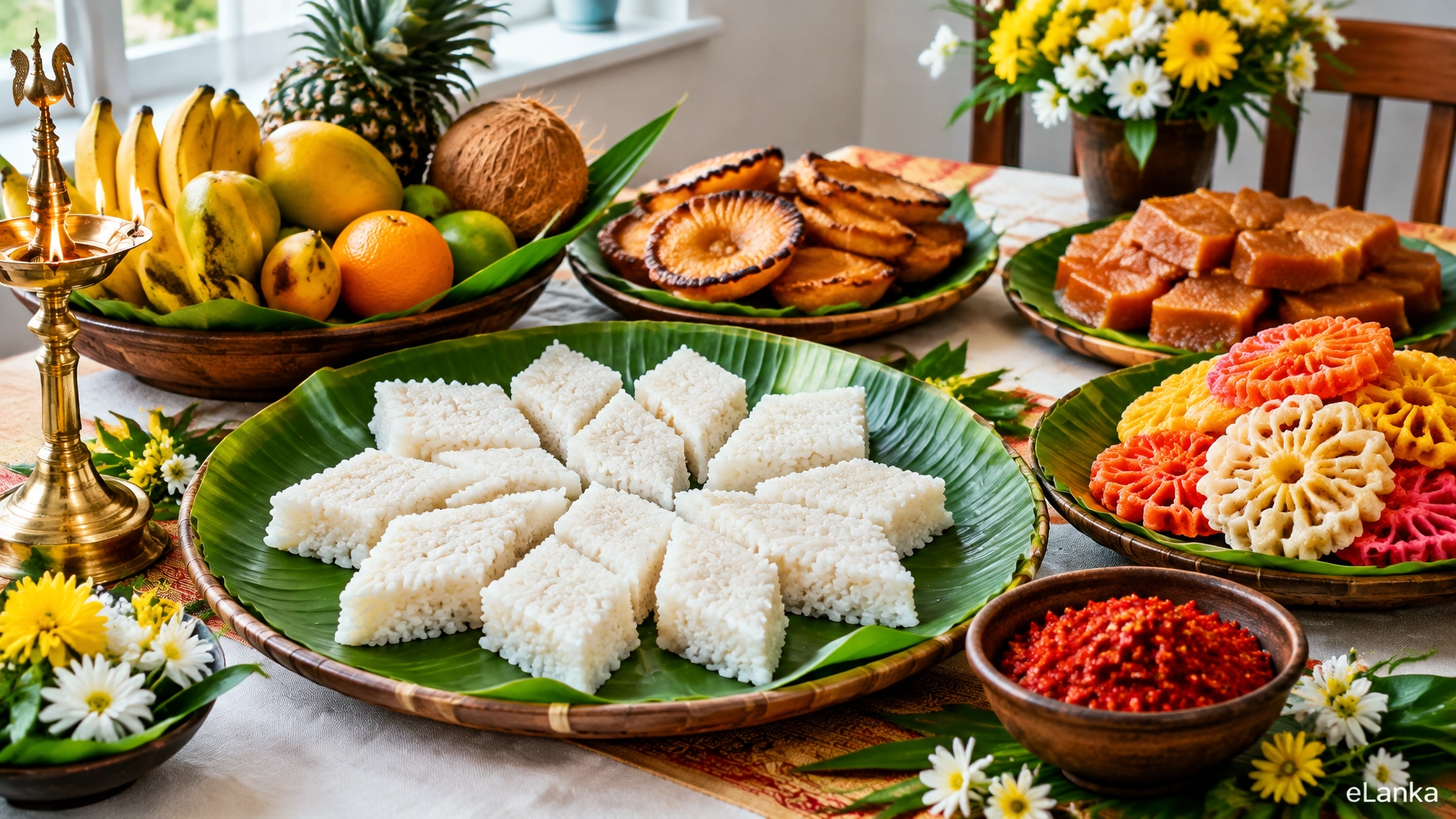
Kiribath is rice cooked with coconut milk until it forms a soft, sliceable cake. It is often cut into diamonds or squares and served as the first meal of the new year. Preparing it together can be a simple way for children to take part, even if the family adjusts the timing to suit a UK evening.
5. Share the first meal
Families gather to eat kiribath, often with lunu miris: a spicy relish made with chilli, onion, lime and salt. The meal may also include bananas, other fruit and Avurudu sweets. Recipes and serving customs vary between families, so there is no single menu every household must follow.

6. Enjoy the sweets and seasonal food
Avurudu tables often feature kokis, crisp flower-shaped snacks; aluwa, a sweet made with rice flour; and athirasa and kavum, treacle-based sweets. Mung kavum includes mung flour, while mung-bean and sesame sweets are also enjoyed. Seasonal fruit and savoury snacks round out the spread.
In the UK, Sri Lankan and South Asian grocers in areas such as London, Leicester, Birmingham and Manchester can be good places to look for rice flour, coconut products, spices, mung flour and treacle. Some Avurudu sweets are sold ready-made, but availability is seasonal; others are more often prepared at home. Call ahead, especially for specialist ingredients or freshly made sweets.

7. Anoint the head with oil
Hisathel gaya refers to the traditional anointing of the head with oil, often followed by bathing. It is associated with wellbeing and the start of the new year. The day and timing can vary according to the annual calendar and family custom, so check the current guidance and follow what is familiar in your household.
8. Begin work and exchange money
Wada gamanaya means setting out for work or beginning an activity at an auspicious time. Some families mark it by opening a book, starting a small task or symbolically leaving home. Ganudenu refers to the exchange of money or a small transaction, often between family members, as a wish for prosperity. These rituals can be kept simple and adapted for children.
9. Welcome the community through games and gatherings
Across the UK, Sri Lankan associations, temples, student societies and school past pupils’ associations host Avurudu festivals and New Year gatherings. Events often include traditional games, performances, food stalls and activities for children. Temple observances and community celebrations may take place on different dates from the New Year itself, making it easier for families to attend.
Many events welcome the wider community. Check association and temple notices from around February onwards for dates and booking details. A kolam, a decorative floor design made at a doorway, is another way some families mark the occasion at home.

10. Make the celebration meaningful for children
For children born or raised in Britain, a short, relaxed celebration can make the customs easier to understand. Families might light a lamp, share kiribath and sweets, exchange a small gift or symbolic amount of money, and ask children to begin a new activity or task.
Traditional games can bring everyone together. Olinda keliya is a seed game; kotta pora is a pillow-fighting contest, usually played with a padded pole and balance beam; and aliyata eye athe is a team game often translated as “elephant’s eye.” Adapt games for the age and space available, and explain the rules before playing. Sharing a plate of sweets with neighbours or classmates can also introduce children to the festival in a welcoming way.

Making Avurudu work in a UK home
Some traditional ingredients and equipment can be harder to find in Britain. Fresh jackfruit, king coconut, banana flower and betel leaves may be seasonal or available only from specialist grocers. If they are unavailable, use ingredients your family enjoys and can source safely; no single substitute is essential to celebrating the festival.
Clay pots may be sold by South Asian kitchenware shops or online, but a regular clean pot is perfectly practical. Grocers often increase their range of festive foods in the weeks before Avurudu. For less common items, check with local Sri Lankan shops and online suppliers early, and confirm availability before travelling or ordering.
Keeping the customs alive across generations
Grandparents and elders can help children understand the meaning behind each ritual. Asking not only how a custom is performed, but why it matters, can open up conversations about gratitude, renewal, sharing, respect and family connection. Their explanations may also show how traditions have changed across generations and countries.
The eLanka community platform and its astrology section may help readers stay connected with Sri Lankan culture and seasonal information. For community events, check local association and temple notices from February onwards. Confirm the exact nakath times from a current source each year, as they change annually.
Sources and further reading
- Sinhala and Tamil New Year customs: Office for National Unity and Reconciliation
- Sinhala Tamil New Year Day: Central Province Tourism
- UK Sinhala and Tamil New Year community celebrations: Sri Lanka High Commission
At eLanka, we respect the rights of creators. If we have used an image you own and you’d like it removed, please email us at info@elanka.com.au and we’ll handle it promptly.
Thanks.
eLanka team
eLanka Disclaimer
Content published on eLanka may be created by the eLanka team, submitted by contributors or third parties, reproduced or adapted from other sources with appropriate source acknowledgement, or provided as promotional/advertising material by our clients. While eLanka takes reasonable care in preparing and publishing content, we do not warrant its completeness or accuracy. Views expressed are those of the respective authors or contributors and do not necessarily represent the views of eLanka. Third-party contributors, content providers and advertisers are responsible for the accuracy of material they supply and for ensuring they hold the necessary rights and permissions for its publication. Advertising and promotional content should not be regarded as an endorsement by eLanka of any product, service or claim.