

Sri Lankan Food in the UK: 12 Dishes Worth Travelling For (and Where to Find Them)

Sri Lankan food is having a moment in Britain. More diners are discovering it as a distinctive cuisine in its own right, rather than mistaking it for a variation of Indian food. Dedicated Sri Lankan restaurants, hopper bars, kottu shops, food halls and street-food stalls are making the island’s varied flavours easier to find across the UK.
For the Sri Lankan diaspora, a familiar plate can bring back memories of home. For British readers trying the cuisine for the first time, it offers a rewarding introduction to crisp hoppers, fragrant curries, coconut-rich sambols and lively street food.
12 Sri Lankan dishes to look out for
1. Hoppers and egg hoppers
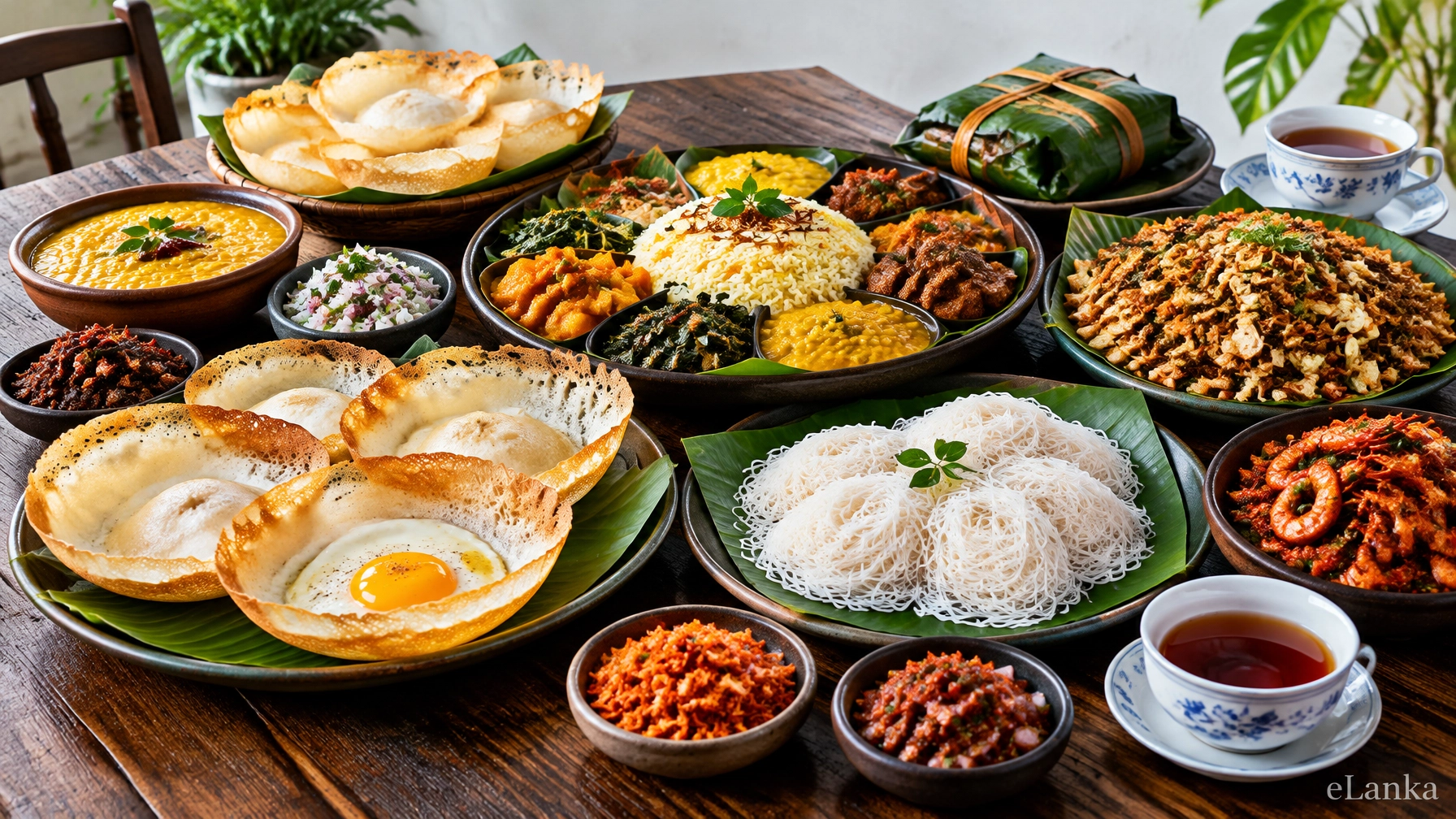
Hoppers, or appa, are bowl-shaped pancakes made from fermented rice-flour batter and coconut milk. They have crisp, lacy edges and a soft centre, ready to scoop up curry or sambol. An egg hopper has an egg cooked in the middle; the yolk remains visible and can be soft or set, depending on how it is prepared.

2. String hoppers
String hoppers, known as idiyappam, are delicate nests of steamed rice-flour noodles. They are usually served with curries, dhal and sambols rather than eaten like a pancake. Their light texture makes them a lovely match for a richly flavoured sauce.

3. Kottu roti
Kottu is made by chopping godamba roti (a thin, chewy flatbread) on a hot griddle with vegetables, egg and, if requested, chicken or another protein. The rhythmic clatter of the metal blades is part of the experience, as the cook chops and mixes everything together. Look for it under the spelling kothu on some menus.

4. Pol roti with lunu miris
A pol roti is a round flatbread made with grated coconut. It is substantial enough for breakfast or a simple meal, and often served with lunu miris: a punchy chilli, onion and lime sambol. The combination balances the bread’s gentle sweetness with heat and sharpness.
5. Kiribath
Kiribath, or milk rice, is rice cooked with coconut milk until soft and cohesive, then cut into neat diamond or square pieces. It is often served with lunu miris, especially for celebrations and special occasions.
6. Rice and curry
A Sri Lankan rice-and-curry meal is more than a bowl of rice with one sauce. A traditional plate may include rice, several vegetable curries, dhal, sambols, pickle and a fish, meat or plant-based curry. The combinations vary by household and region, so a mixed plate is a good way to discover different flavours at once.

7. Lamprais
Lamprais reflects Sri Lanka’s Dutch Burgher culinary heritage. Rice and a selection of accompaniments are wrapped in a banana leaf and baked together, allowing the flavours to mingle. The contents vary, but the parcel commonly includes meat curry and several savoury sides. It is worth asking what is inside before ordering, particularly if you have dietary requirements.
8. Ambul thiyal
This sour fish curry is associated especially with southern Sri Lanka. Goraka, a dried fruit with a tart flavour, helps give ambul thiyal its distinctive sharpness. The fish is cooked with spices until the seasoning clings closely to each piece.
9. Devilled dishes
“Devilled” usually means a hot, tangy preparation with chilli, onion and other seasonings. Devilled chicken and prawns are popular choices, often served with rice or bread. Spice levels differ between kitchens, so ask before ordering if you prefer a milder dish.
10. Parippu and sambols
Parippu, or dhal curry, is a comforting dish made with lentils, spices and often coconut milk. It regularly appears alongside rice and curry. Two sambols to look for are pol sambol, made with grated coconut and chilli, and seeni sambol, a sweeter, slow-cooked onion relish.
11. Short eats: vadai, murukku, rolls and cutlets
Sri Lankan short eats are savoury snacks served between meals or with tea. They include vadai (also written vadai or wade), savoury fritters often made with lentils; crisp, curly murukku; fish cutlets; and rolls filled with savoury ingredients, crumbed and fried. A plate of assorted short eats is an easy way to try several at once.
12. Ceylon tea, sweets and something cold
Sri Lanka is well known for Ceylon tea, which can be served plain or with milk. For a chilled treat, try faluda, a sweet drink commonly made with milk and other additions, or Sri Lankan ginger beer. Festive sweets include crisp kokis, aluwa (a flour-based sweet), kavum (oil cakes) and watalappan, a rich steamed coconut custard often flavoured with jaggery and spices.
What makes Sri Lankan cooking distinctive?
Sri Lankan cooking draws on roasted curry powders, coconut in many forms, curry leaves and pandan, known locally as rampe. Goraka and tamarind bring sourness; Maldive fish, or umbalakada, can add a savoury depth to sambols and curries. Together, these ingredients create a balance of heat, sourness and richness.
Britain’s familiar curry-house menus have their own histories and regional traditions, including Bangladeshi and North Indian dishes. Sri Lankan food has a different flavour profile and its own range of breads, sambols, rice dishes and spice blends. Exploring it adds another chapter to the UK’s rich South Asian food scene.
Where to find Sri Lankan food in the UK
London offers a broad choice. Hoppers serves hoppers, kothus and other dishes inspired by Sri Lankan village toddy shops. Kolamba has restaurants in Soho and East London, while Rambutan serves Sri Lankan diaspora cooking at Borough Market. Paradise is another name associated with London’s Sri Lankan dining scene, but restaurant listings and status can change, so check directly before travelling.
Outside central London, Wembley, Harrow, Tooting, East Ham and Ilford are useful areas to explore for Sri Lankan restaurants, hopper shops and kottu. They are not an exhaustive directory: searching “Sri Lankan food near me” and checking recent menus and reviews can help uncover smaller local cafés and takeaways.
Sri Lankan food is also established in Leicester, Birmingham, Manchester and Preston, with further options in the North and Scotland. In Preston, Ayubowan Street Food at the Mad Giant Food Hall is one reported example. In Wrexham, Ceylon Wok brings Sri Lankan and Chinese cooking together.
For a regional restaurant recognised nationally, Sigiriya Grill in Knutsford was named among the Asian Catering Federation’s UK Top 100 Curry Restaurants for 2026. Its menu combines Sri Lankan curries and street-food favourites, with options for different dietary needs.
This is a guide, not an exhaustive or real-time directory. Please check current opening hours, locations, booking arrangements and menus directly with each venue before travelling.
Finding ingredients for home cooking
Speciality Sri Lankan and South Asian grocers, as well as online shops, are good places to look for roasted curry powder, goraka, Maldive fish, pandan and fresh or frozen curry leaves. Some stock frozen hoppers and string hoppers, while others sell fresh hopper batter. Availability varies by shop and location, so check stock with your local grocer before making a special trip.
For online shopping, SL Foods lists Sri Lankan and South Asian groceries, while Suganthey Stores is a Leicester-based option. Ask the shop if you cannot find an ingredient by its English name: Sri Lankan labels and spellings can vary.
Trying Sri Lankan food for the first time
For a first visit, share an order of short eats, then try hoppers or string hoppers with dhal, pol sambol and a curry. Kottu is another satisfying choice if you want a complete dish. If you are unsure about heat, ask which options are mild and whether the kitchen can adjust the spice.
Some people enjoy eating with the right hand, as is customary in many Sri Lankan homes. If you would like to try, wash your hands first and use your fingertips to combine small portions of rice and curry. Cutlery is perfectly fine, too.
From London hopper bars to regional restaurants and community grocers, Sri Lankan food in the UK is well worth exploring. If you have a favourite Sri Lankan restaurant, food hall or grocer anywhere in the country, please share your recommendation with eLanka. We welcome suggestions to help keep this guide useful for readers.
Sources and further reading
- Asian Catering Federation: UK Top 100 Curry Restaurants 2026
- Knutsford Guardian: Sigiriya Knutsford among the UK’s Top 100 Curry Restaurants for 2026
- Blog Preston: Ayubowan Street Food at Mad Giant Food Hall
- The Leader: Sri Lankan and Chinese-style restaurant opening in Wrexham
- eLanka: Sigiriya Knutsford named among the UK’s Top 100 Curry Restaurants for 2026
At eLanka, we respect the rights of creators. If we have used an image you own and you’d like it removed, please email us at info@elanka.com.au and we’ll handle it promptly.
Thanks.
eLanka team
eLanka Disclaimer
Content published on eLanka may be created by the eLanka team, submitted by contributors or third parties, reproduced or adapted from other sources with appropriate source acknowledgement, or provided as promotional/advertising material by our clients. While eLanka takes reasonable care in preparing and publishing content, we do not warrant its completeness or accuracy. Views expressed are those of the respective authors or contributors and do not necessarily represent the views of eLanka. Third-party contributors, content providers and advertisers are responsible for the accuracy of material they supply and for ensuring they hold the necessary rights and permissions for its publication. Advertising and promotional content should not be regarded as an endorsement by eLanka of any product, service or claim.